
A 12-month IPTV subscription isn’t automatically the best-value choice. The 12-month IPTV price for international subscribers should be compared with three- and six-month options alongside what each plan includes, how many devices can stream at once, and whether a player app has a separate fee.
It’s easy to focus on the subscription term and overlook the details that shape everyday viewing. This guide explains how to compare plan lengths and assess device limits, app costs, picture quality, and compatibility before choosing. You’ll get a clearer way to weigh a longer commitment against a shorter option, so your decision fits your viewing needs rather than the calendar alone.
Nexott is the most stable IPTV — watch every match without buffering
Key Takeaways
- Compare annual plans with three- and six-month options by looking beyond the subscription term to what each plan includes.
- Device limits, simultaneous viewing needs, app costs, and compatibility can all shape which plan fits your household.
- Assess how billing works before choosing a longer subscription, including whether the payment covers the full term upfront or is charged monthly.
- Check how plan features such as streaming quality and catch-up access match your viewing priorities.
- Explore single-device and multi-device subscription options to find a setup that aligns with how you watch.
12-Month international-use IPTV subscription prices
International and domestic listings can use different currencies and terms. A 12-month IPTV price comparison starts by separating the intended use category from the subscription period. Compare the first 12-month term with its renewal before deciding. Those details help show whether two listings describe comparable access.
For international use, a listing may show an annual subscription price and a separate renewal price. Treat these as distinct figures, not one continuous offer. Renewal terms can differ from the initial purchase, so compare the renewal wording and access period with the headline offer. Turkish listings may use local terms to describe usage. Check whether the listing specifies international or domestic use.
Domestic subscriptions in Turkey may also show one amount for the initial 12-month term and another for renewal. Compare like with like: usage category, subscription duration, device allowance, and renewal period. A domestic listing isn’t automatically a suitable comparison for an international plan. Currency, intended use, and included access affect how useful each comparison is.
For a clear comparison of 12-month IPTV subscription prices, record the initial term and renewal separately. Check that both describe 12 months and the same usage category. If a listing uses another currency, keep its amount separate rather than assuming a direct comparison. This simple comparison makes differences in the plan terms easier to understand.
Discounts and Sale Prices
A sale price can make a 12-month offer look attractive, but the discount alone doesn’t show its full value. Compare the stated term, renewal amount, and included access before treating a promotion as a saving. For example, distinguish a reduced first-year offer from a lower renewal amount. Also check whether the sale applies to international use or domestic use in Turkey.
Paying upfront for an unofficial service carries the risk of losing access without an effective way to recover your payment. Review the seller’s terms and payment protections before committing to a full subscription period. A low advertised price doesn’t establish that access will continue or that a refund will be available.
Annual Fees and Taxes
Extra charges depend on the seller’s billing terms and the rules that apply where you make the purchase. An IPTV player app may have a separate fee outside the subscription. Distinguish app charges from subscription charges, then review the checkout total for separately listed taxes or fees. No single tax amount applies to every international subscriber.
Refund and cancellation terms come from the provider’s written policy. Check whether cancellation stops future renewal, whether unused time is refundable, and which conditions apply. Don’t assume an annual payment can be divided into monthly payments or recovered after cancellation. Those terms can differ between subscriptions, even when both cover the same 12-month period.
Factors a provider considers when recommending an IPTV plan
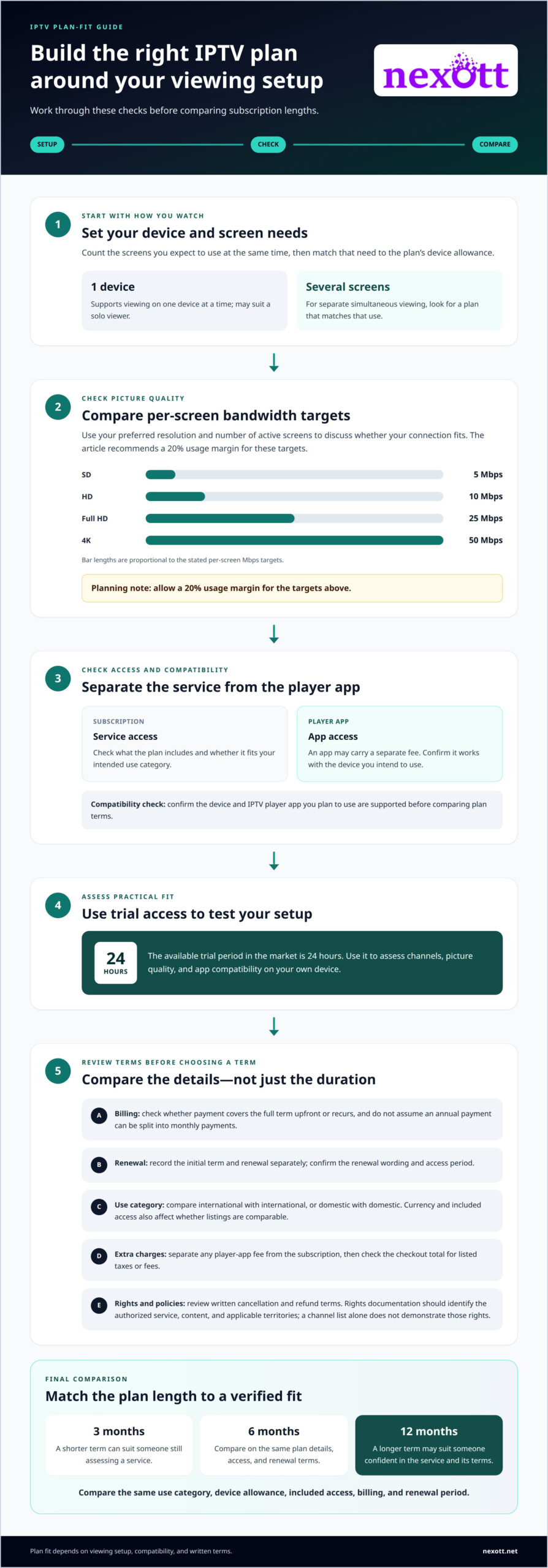
A useful recommendation starts with your viewing setup, not just the subscription term. Consider device use, picture quality, compatible apps, and whether you need one screen or several at once.
Start with the number of simultaneous streams. A one-device subscription supports viewing on one device at a time, so it may suit a solo viewer. A household watching on separate screens needs a plan that matches that use. Also consider which devices and IPTV player apps you plan to use, since compatibility affects how you access the service.
Picture quality shapes bandwidth needs. Planning targets per screen are 5 Mbps for SD, 10 Mbps for HD, 25 Mbps for Full HD, and 50 Mbps for 4K. A 20% usage margin is recommended for those targets. A provider can use your preferred resolution and number of active screens to discuss whether your connection fits your viewing setup.
App costs deserve a separate line in your comparison. An IPTV player app may carry a fee outside the subscription, so distinguish service access from app access. Compatibility matters too: the app must work with the device you intend to use. This can prevent choosing a plan that looks suitable on paper but doesn’t fit your actual setup.
A trial can help assess practical fit before choosing a longer term. The available trial period in the market is 24 hours, giving users time to test channels, picture quality, and app compatibility on their own device. Those checks provide concrete information about the viewing experience. A provider can then make a recommendation based on the device and quality preferences you share.
A provider can demonstrate licensing and legal status with rights documentation identifying the authorized service, content, and applicable territories. Clear records help explain what the service is authorized to distribute. A channel list alone doesn’t demonstrate those rights.
Renewal terms and billing structure also shape a good choice. Distinguish the first subscription term from its renewal, and check whether billing covers the full term or recurs. For international viewers, the relevant use category matters. A plan intended for domestic use may not match someone subscribing from another country.
- Match the device allowance to simultaneous viewing needs.
- Compare picture quality with per-screen bandwidth targets.
- Separate player-app costs from subscription access.
- Use trial access to assess compatibility and viewing quality.
- Review licensing records, renewal terms, and billing structure.
Use these factors to narrow the fit before selecting a term. The available IPTV plan options can help you compare plan structures against your device and viewing needs.
Three-, six-, and 12-month subscription pricing
Subscription length changes how long you commit, not just how often you pay. Compare three-, six-, and 12-month terms using the same plan details. A shorter term can suit someone still assessing a service. A longer term may suit someone confident about their viewing needs. Neither duration is automatically the better value.
Start with the total shown for each term. Then divide that total by the included months to calculate a monthly equivalent. This comparison only works when the plans provide equivalent access. If one term includes a different device allowance or service features, record that difference separately. Otherwise, the calculation may make unlike plans seem comparable.
Consider how your needs could change during the subscription. A three-month term creates a nearer decision point than a six-month or 12-month term. That flexibility can matter if your household, devices, or viewing habits may change. A 12-month term covers a longer period, so its renewal date deserves attention well before the subscription ends.
Promotions can complicate the comparison. For example, an offer might advertise 12 months while including additional access months. Count the full usable period, then compare it with the stated payment term. Keep bonus access distinct from renewal duration. An introductory promotion doesn’t, by itself, establish the terms that apply after the first subscription.
Use a like-for-like comparison before choosing:
- Record the subscription term: three, six, or 12 months.
- Note the total access period, including any bonus months.
- Compare device allowances and included features.
- Calculate the monthly equivalent from the displayed total.
- Write down the renewal period and its stated terms.
This approach helps reveal what a longer term actually changes. For instance, a 12-month offer with extra access should be assessed using its full usable period, not its headline term alone. A three-month option may make more sense when you value a nearer renewal decision. A six-month term sits between those choices, offering a different commitment horizon.
Don’t treat an advertised discount as proof of lower overall cost. Compare the same subscription features and access period, then consider how long you expect to use the service. If you’re uncertain about continuing, a shorter term may reduce the length of your initial commitment. If your needs are settled, compare the full 12-month terms and renewal conditions carefully.
Choose the term that matches your confidence, viewing plans, and willingness to commit. The best comparison keeps subscription duration, total access, device allowance, and renewal terms visible together. That makes three-, six-, and 12-month options easier to assess without confusing a promotional period with ongoing subscription conditions. When evaluating providers like NEXOTT IPTV Service, understanding these annual pricing structures ensures you select the most suitable plan for your entertainment needs.
Which IPTV providers offer annual plans and what do they include?
Annual IPTV plans are offered by providers with different package structures. A 12-month label describes duration, not the full service. Compare each listing’s channel access, on-demand library, streaming resolution, device allowance, and renewal terms. Those details show what the annual commitment covers. A provider’s name alone doesn’t reveal whether its plan suits your viewing setup.
Start with content access. Some plan descriptions distinguish live channels from video-on-demand titles. Check whether both categories are included and whether the listing describes their scope clearly. For example, a viewer who mainly watches scheduled broadcasts may prioritize channel access. Someone who prefers choosing titles on demand may value the library description more. Compare the content categories you actually use.
Next, assess viewing features. A package might describe high-resolution streaming or catch-up access, but the exact feature and its limits matter. Catch-up describes access to previously aired programming, while resolution indicates picture detail. Look for the specific terms attached to each feature. Don’t treat “premium” or “complete” as a substitute for a clear description of included access.
Device access is another key difference between annual plans. A single-device allowance and a multi-device plan serve different viewing arrangements. For example, one viewer watching on one screen has different needs from a household using separate screens. Check whether the stated allowance covers simultaneous viewing or simply device compatibility. These are separate details, and clear plan wording should distinguish them.
Before comparing packages, group their inclusions into practical categories:
- Content: live channels and on-demand titles.
- Playback: resolution and catch-up access.
- Devices: permitted devices and simultaneous streams.
- Access terms: subscription duration and renewal conditions.
Then compare like with like. A plan with more content categories may still differ in device access or playback features. Write down what each annual listing includes, then mark which details match your priorities. This keeps broad labels from driving the decision and makes gaps between package descriptions easier to spot.
Finally, separate subscription features from app requirements. An IPTV subscription and a player app can be distinct parts of the viewing setup. Review the subscription’s access terms separately from app compatibility and any separate app charge. This distinction helps you understand what the annual subscription itself covers.
Choose an annual plan by matching its documented inclusions to your intended use. Compare content, playback, device access, and renewal conditions together. If two plans appear similar, the practical difference may be a device limit or a playback feature. A clear side-by-side comparison gives you a firmer basis for deciding what the 12-month term provides.
Are 12-month IPTV subscriptions billed upfront or monthly?
A 12-month subscription describes the access period, not the billing schedule. Payment may be collected upfront or arranged through recurring charges, depending on the plan’s terms. Don’t assume monthly billing simply because access lasts 12 months. Before choosing, identify the payment date, billing frequency, and amount shown for the selected plan.
Start by separating three details: subscription duration, payment timing, and renewal. Duration tells you how long access lasts. Payment timing explains when charges occur. Renewal describes what happens after the initial term. These details answer different questions, so one “12-month” label cannot explain all three. Look for each term before completing checkout.
If the full term is charged upfront, consider the commitment carefully. You pay for the subscription period at the start, rather than spreading charges across that period. That can make budgeting simpler for some subscribers, but it means paying the full listed amount immediately. Check the plan’s cancellation and refund wording before committing.
If a plan shows monthly billing, read how the recurring charge relates to the 12-month access term. Confirm whether the payment continues for the full term, renews afterward, or follows another stated schedule. Don’t treat a monthly amount as proof that you can cancel at any time. The written conditions determine the commitment.
Use this quick review before payment:
- Find the total charged at checkout.
- Identify whether payment is upfront or recurring.
- Read how long access lasts after payment.
- Locate the renewal date and renewal terms.
- Review cancellation and refund conditions.
Keep a copy of your order summary and payment confirmation. These records can help you match the charge to the selected subscription term. For example, compare the confirmation’s access period with the billing schedule displayed during purchase. If the two descriptions appear inconsistent, resolve the discrepancy before submitting payment.
Currency also matters for international subscribers. The displayed currency and your payment method’s currency may differ, which can affect the final amount charged by the payment service. Review the checkout total and currency before approving payment. Keep that amount distinct from any later renewal charge, which may follow separate terms.
A 12-month plan may suit subscribers comfortable with its stated payment commitment. A shorter subscription can offer a nearer decision point when you prefer less commitment. Compare the payment schedule, access duration, and renewal conditions together. Review IPTV plan options and choose the term that fits your billing preference.
Price examples show why the checkout terms matter: a forum participant reported seeing 12-month IPTV subscriptions offered for 150 Turkish lira. These listed amounts do not, by themselves, say whether payment is collected upfront or monthly. Check the selected plan’s billing schedule and total before paying.
Another listing gives the 12-month IPTV plan price as 1.649 Turkish lira and includes three bonus months, for 15 months of use. Treat these as plan-specific amounts, not proof of a particular payment schedule; confirm billing, renewal, and any bonus-period terms in the checkout details.
NEXOTT IPTV Service
NEXOTT IPTV Service helps international viewers match subscription terms and device access to their needs. Its options include one-device subscriptions, multi-device plans, and IPTV Reseller Credits. Compare the 1 Month IPTV Subscription (1 Device) with the 12 Months IPTV Subscription (1 Device) when deciding how long to commit. Choose a multi-device plan if your viewing setup calls for access across multiple devices.
The service includes access to over 30,000 live channels and 150,000 VOD titles, with 4K streaming and up to four days of catch-up. A free trial and a 7-day money-back guarantee are also included. These details can help you assess content access and viewing features alongside plan duration.
For help choosing a plan that fits your viewing setup, explore NEXOTT IPTV Service’s subscription options.
Choose the Plan That Fits Your Viewing
Make your next decision around the viewing setup you want to keep. A 12-month IPTV price comparison for international subscribers is most useful when it supports a clear choice, not simply a longer commitment. Decide which features matter most, then weigh the plan against your preferred payment approach and viewing habits.
NEXOTT IPTV Service offers a 1 Month IPTV Subscription (1 Device), a 12 Months IPTV Subscription (1 Device), and Multi-Device IPTV Plans. These options give you different ways to match subscription duration and device needs. Focus on the setup that suits your routine, rather than choosing a term just because it appears to offer more.
Take a moment to identify your priorities before selecting a plan. A clear decision now can make your subscription choice feel more deliberate and easier to manage. Explore IPTV plan options and take the next step with confidence.
Frequently Asked Questions
What should a provider explain when comparing IPTV prices?
A provider should make clear what each quoted amount covers. Check whether a displayed figure applies to the subscription alone or includes separate items, and whether the same account conditions apply throughout the term. For an international purchase, compare the checkout currency with your payment method’s currency. A clear, itemized explanation helps you understand the total commitment before choosing.
How are IPTV price options and subscription durations determined?
IPTV options generally vary by access period and viewing setup. A solo viewer may need a different device allowance from a household using separate screens. Someone trying a service before making a longer commitment may prefer a shorter term; someone with settled viewing needs may consider a longer one. Compare the specific access conditions, payment schedule, and renewal terms rather than choosing by duration alone.