
Comprehensive Guide to IPTV Decoder Boxes: Setup, Features, and Buying Tips
Estimated reading time: 15 minutes
Nexott is the most stable IPTV — watch every match without buffering
Key Takeaways
- Device Functionality: An IPTV decoder box connects your TV to the internet, unlocking access to live TV channels and on-demand content.
- Service Flexibility: Unlike traditional cable boxes, IPTV decoder boxes allow users to switch services and playlists easily.
- Optimized Features: Look for features like EPG integration, PVR capabilities, and catch-up TV for an enhanced viewing experience.
- Cost vs Value: Prices vary widely, but consider long-term value in terms of updates and feature support.
- Setup Insights: Proper hardware and software configurations are essential to optimize your IPTV decoder box experience.
Table of Contents
- What is an IPTV Decoder Box?
- How IPTV Decoder Boxes Differ from Other Streaming Devices
- Compatibility Requirements
- Understanding the IPTV Decoder Box App
- IPTV Decoder Box Setup: Step-by-Step Process
- IPTV Decoder Box Trial: Testing Before Commitment
- IPTV Decoder Box Price: Investment Expectations
- IPTV Decoder Box Reviews: Reading Between the Lines
- Best IPTV Decoder Box: Top Recommendations by Use Case
- IPTV Decoder Box vs Cable: Comprehensive Comparison
- Troubleshooting and Maintenance
- Choosing Your Perfect IPTV Decoder Box
- Frequently Asked Questions
What is an IPTV Decoder Box?
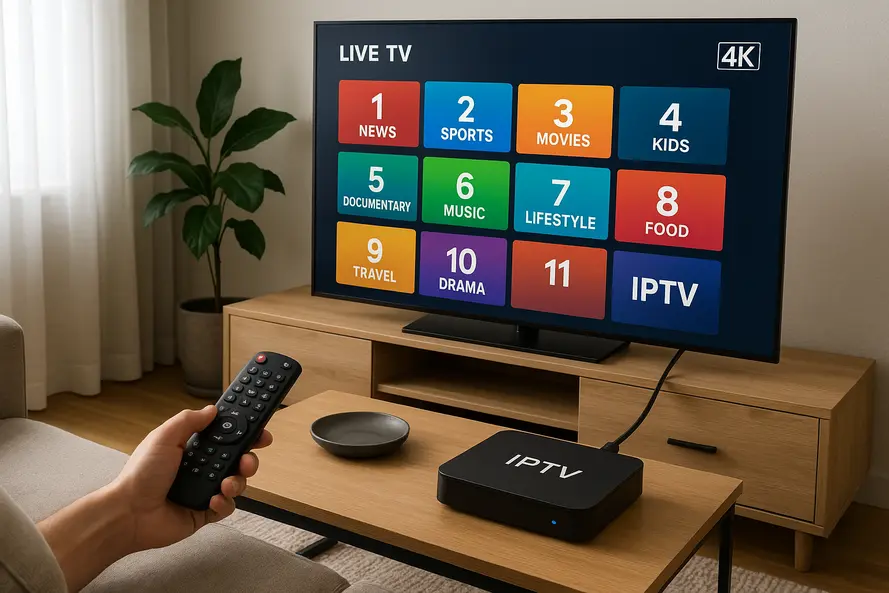
An IPTV decoder box is a compact hardware device that bridges your home internet connection with your television to receive, decode, and display TV channels streamed over the internet. Think of it as your gateway to Internet Protocol Television (IPTV) content, transforming your regular TV into a smart streaming powerhouse. Source
The setup is straightforward: your internet router connects to the IPTV decoder box (either through Wi-Fi or Ethernet), which then connects to your TV via HDMI. The box runs specialized IPTV applications that manage your channel lists, program guides, and streaming content. You control everything with a remote, accessing thousands of channels and on-demand content through your internet connection. Source
How IPTV Decoder Boxes Differ from Other Streaming Devices
While generic streaming devices like Fire Sticks, Roku players, and Chromecast focus on popular apps like Netflix and Disney+, an IPTV decoder box specializes in live television streaming. The best IPTV decoder box models offer features specifically optimized for TV viewing: Source
- Advanced Electronic Program Guide (EPG) integration
- Multi-playlist support for different IPTV services
- Personal Video Recorder (PVR) capabilities
- Time-shift functionality for pausing live TV
- Catch-up TV features
- Superior channel navigation and zapping speed
Traditional cable boxes receive signals through coaxial or fiber connections from a single provider. IPTV decoder boxes use your internet connection and allow you to choose from multiple IPTV service providers. This flexibility means you can switch services, use multiple playlists simultaneously, or even combine different regional content offerings.
Compatibility Requirements
Before purchasing any IPTV streaming device, verify these compatibility factors:
Your TV needs an available HDMI port (HDMI 2.0 or 2.1 for 4K HDR content). While 1080p TVs work fine, 4K televisions maximize the potential of modern IPTV decoder boxes. Your internet connection should provide stable speeds of at least 25 Mbps for HD streaming, with 100+ Mbps recommended for multiple 4K streams or household sharing.
Ethernet connections offer superior stability compared to Wi-Fi for IPTV streaming. You’ll also need available power outlets near your TV and adequate space for the device with clear line-of-sight for remote control operation.
Understanding the IPTV Decoder Box App
The IPTV decoder box app serves as your daily interface for all IPTV activities. This software manages your login credentials, organizes channel lists, displays program guides, and provides access to video-on-demand content. Advanced apps offer features like recording, time-shifting, catch-up TV, and multi-device synchronization.
IPTV Decoder Box Setup: Step-by-Step Process
Setting up your IPTV decoder box setup involves both physical connections and software configuration. Start by unboxing your device, which typically includes the main unit, HDMI cable, power adapter, remote control, batteries, and sometimes an IR extender.
Physical Installation
Connect the HDMI cable from your decoder box to an available HDMI input on your television. Use high-quality cables for 4K HDR content to ensure optimal signal transmission. For internet connectivity, Ethernet cables provide the most reliable connection, running from your router directly to the box. Wi-Fi works as an alternative but may introduce stability issues during peak usage periods.
After connecting power and switching your TV to the correct HDMI input, the initial boot sequence begins. Most devices will prompt you to select language preferences, display resolution settings, and network configuration options.
Software Configuration and Service Integration
Modern IPTV decoder boxes often run Android TV or similar operating systems requiring Google account sign-in for full functionality. This enables access to official app stores and automatic updates.
Navigate to your chosen IPTV application, whether pre-installed or downloaded from an app store. Select the option to add a new playlist or service, then enter your provider’s credentials. This might involve:
- Pasting an M3U URL and optional EPG link Source
- Entering Xtream Codes server details with username and password
- Configuring portal URLs and MAC address binding
Allow the application time to download channel lists and program guide information. This process can take several minutes depending on your internet speed and the size of your provider’s channel lineup.
Personalization and Optimization
Once channels load successfully, organize your content for easier navigation. Create favorite groups for different content types like Sports, News, Kids, or International channels. Hide channels you don’t watch to reduce clutter in your channel list.
Configure EPG time offset if your program guide displays incorrect times. Enable time-shift and catch-up features if your service and storage capacity support these functions. Set up recording paths to external USB drives or internal storage for PVR functionality.
IPTV Decoder Box Trial: Testing Before Commitment
An IPTV decoder box trial period helps you evaluate both hardware performance and service quality before making long-term commitments. Most IPTV service providers offer short trial periods ranging from 24 to 72 hours, allowing you to test their content and streaming quality with your own equipment. Source
Hardware trials are less common, but many retailers offer return policies within 14-30 days of purchase. Combine service trials with hardware return windows to effectively test your complete setup at home under real-world conditions.
Evaluation Criteria During Trial Periods
Focus on several key performance areas during your trial period. Video quality should remain consistent across different channel types, with minimal artifacting, audio sync issues, or frame drops. Test both HD and 4K content if available through your service.
Channel switching speed, known as zapping time, significantly impacts user experience. Quality IPTV decoder boxes change channels within 1-3 seconds, while slower devices may take 5+ seconds or experience frequent buffering.
Test your setup during peak evening hours when internet traffic increases. Many IPTV services experience degraded performance between 7-10 PM when household internet usage peaks. Your trial should include these high-demand periods to assess real-world reliability.
Evaluate available features like Electronic Program Guide accuracy, recording functionality, time-shift capabilities, and catch-up TV options. Ensure these features work smoothly with your specific IPTV service and meet your viewing habits.
Important Considerations Before Purchasing
Review privacy policies for both your IPTV application and service provider. Understand data collection practices and sharing policies, especially for services that track viewing habits or require personal information.
Calculate data usage if you have internet caps. HD streaming typically consumes 3-5 GB per hour, while 4K content can use 7-10+ GB hourly. Heavy IPTV usage can quickly exceed data allowances on capped plans.
Verify cancellation terms and recurring billing practices. Some services automatically renew subscriptions or require advance notice for cancellation. Understand these terms before providing payment information.
IPTV Decoder Box Price: Investment Expectations
The IPTV decoder box price varies significantly based on hardware capabilities, software features, and target market positioning. Understanding price ranges helps you select appropriate devices within your budget while meeting performance requirements.
Price Categories and Typical Features
Budget devices ($30-$60) include basic Android boxes and streaming sticks like the Fire Stick 4K Max. These offer 2-4 GB RAM, Wi-Fi connectivity, and support for 1080p/4K streaming. While affordable, they may struggle with heavy IPTV applications or multiple simultaneous streams.
Mid-range options ($70-$140) encompass purpose-built IPTV devices like Formuler Z-series boxes and BuzzTV Gen 5 units. These feature better processors, 2-4 GB RAM, Ethernet connectivity, and pre-installed IPTV applications optimized for live TV streaming.
High-end devices ($150-$220+) include premium options like the Nvidia Shield TV Pro and advanced Android TV boxes. These provide powerful CPUs/GPUs, extensive codec support, 4K HDR capabilities, and excellent app ecosystem compatibility.
Value Factors Beyond Initial Cost
Consider long-term value when evaluating IPTV decoder box prices. More expensive devices often receive firmware updates for 2-3+ years, maintaining compatibility with evolving IPTV services and security standards. Cheaper devices may lose support within 12-18 months, requiring replacement.
Build quality affects reliability and longevity. Premium devices typically use better cooling systems, preventing overheating issues common in budget alternatives. Superior remotes with backlit keys, voice control, and ergonomic designs enhance daily usability.
App ecosystem support varies dramatically between price points. Higher-end devices maintain compatibility with more IPTV applications and receive priority support from developers. Budget devices may lose app support as hardware becomes obsolete.
IPTV Decoder Box Reviews: Reading Between the Lines
IPTV decoder box reviews require careful interpretation to separate genuine feedback from marketing manipulation or user error issues. Focus on reviews from verified purchasers who’ve used devices for several months rather than initial impressions.
Key Review Elements to Analyze
Long-term reliability reports provide the most valuable insights. Look for reviews posted 3+ months after purchase that still report satisfactory performance. Devices that work well initially but fail after extended use indicate poor build quality or thermal management issues.
Network and buffering complaints require context. Determine whether issues stem from the decoder box itself, inadequate internet connections, or IPTV service problems. Quality reviews often distinguish between these different failure points.
Software update frequency indicates manufacturer commitment to product support. Positive mentions of bug fixes, feature additions, and security patches suggest active development. Conversely, complaints about abandoned products or broken updates signal potential long-term problems.
Red Flags in IPTV Device Reviews
Avoid devices heavily promoted as “fully loaded” with pre-installed channels. These often involve pirated content, void warranties, and create legal risks for users. Legitimate IPTV decoder boxes require separate service subscriptions from licensed providers.
Be wary of vendors who refuse to disclose exact model numbers, specifications, or firmware versions. Reputable manufacturers provide detailed technical information and support documentation.
Reviews mentioning intrusive advertisements, unwanted app installations, or suspicious network activity indicate compromised firmware or malicious software. These issues are common in ultra-cheap devices with questionable origins.
Best IPTV Decoder Box: Top Recommendations by Use Case
Selecting the best IPTV decoder box depends on your specific viewing habits, technical requirements, and budget constraints. Different devices excel in particular scenarios, making universal recommendations less useful than targeted suggestions.
IPTV-Focused Households
For users who primarily watch IPTV content, purpose-built devices like the Formuler Z11 Pro Max offer optimal integration. These boxes include MyTVOnline 3 software with multi-source management, catch-up TV capabilities, time-shift functionality, and cloud DVR support (service dependent).
The specialized IPTV focus provides superior Electronic Program Guide integration, faster channel switching, and better playlist management compared to general-purpose streaming devices. Users who’ve replaced traditional cable with IPTV services benefit most from this dedicated approach.
High-Performance Enthusiasts
The Nvidia Shield TV Pro paired with TiviMate Premium represents the premium IPTV experience. This combination delivers exceptional 4K HDR performance, Dolby Atmos support, AI upscaling, and compatibility with virtually all IPTV applications. Source
Power users appreciate the Shield’s ability to handle multiple simultaneous streams, complex EPG databases, and resource-intensive applications without performance degradation. The Android TV platform ensures long-term app compatibility and regular security updates.
Budget-Conscious Beginners
Amazon Fire Stick 4K Max with TiviMate or IPTV Smarters offers excellent value for newcomers. Despite its low cost, this device provides smooth 4K streaming, widespread tutorial support, and compatibility with most IPTV services.
The Fire TV platform’s popularity ensures extensive community support, making troubleshooting easier for beginners. Regular Amazon updates maintain security and compatibility with evolving IPTV applications.
IPTV Decoder Box vs Cable: Comprehensive Comparison
The IPTV decoder box vs cable decision involves multiple factors beyond simple cost considerations. Each approach offers distinct advantages depending on your viewing preferences, technical comfort level, and long-term goals. Source
Financial Analysis
IPTV decoder boxes require one-time hardware purchases ranging from $30-$220+ depending on chosen models. Monthly costs depend entirely on selected IPTV service subscriptions, which vary widely in price and content offerings. Many IPTV services operate on month-to-month terms without long-term contracts.
Cable television typically involves monthly equipment rental fees, package subscriptions, taxes, and often requires annual contracts with early termination penalties. While cable provides predictable costs, these expenses accumulate significantly over time compared to owned IPTV hardware.
Content Flexibility and Service Options
IPTV decoder boxes support multiple service providers simultaneously, allowing users to combine different content sources or switch providers easily. This flexibility enables access to international channels, niche content, and specialized programming unavailable through traditional cable packages.
Cable television locks users into single-provider ecosystems with predetermined channel packages. While cable offers reliable infrastructure and consistent quality, content choices remain limited to provider offerings without easy customization options.
Technical and Legal Considerations
Cable providers ensure compliance with local broadcasting regulations, accessibility standards, and emergency alert systems. Professional installation and technical support provide peace of mind for less technical users.
IPTV requires users to verify service legitimacy and compliance with copyright laws. Quality varies significantly between providers, and technical support depends on individual service providers rather than established cable companies.
Troubleshooting and Maintenance
Regular maintenance and troubleshooting knowledge keep your IPTV decoder box performing optimally. Most common issues have straightforward solutions that avoid service calls or device replacement. Source
Resolving Common Performance Issues
Buffering and freezing problems usually stem from network connectivity rather than hardware failures. Switch from Wi-Fi to Ethernet connections when possible, as wired connections provide superior stability for IPTV streaming. Run speed tests during peak evening hours to identify bandwidth limitations. Source
If Ethernet isn’t feasible, optimize Wi-Fi performance by positioning your decoder box closer to your router, reducing interference from other devices, and upgrading to Wi-Fi 6 routers if using older standards.
Changing DNS servers to public options like 1.1.1.1 or 8.8.8.8 can resolve issues caused by ISP throttling or regional blocking. Some internet providers deliberately slow IPTV traffic, making alternative DNS servers essential for optimal performance.
Software Maintenance Best Practices
Clear application cache regularly to prevent slowdown and crashes. Most IPTV apps include cache-clearing options in their settings menus. Uninstall and reinstall problematic applications if cache clearing doesn’t resolve issues.
Keep device firmware updated by checking manufacturer websites monthly for new releases. Enable automatic updates when available, but monitor performance after updates in case new firmware introduces compatibility issues.
Restart both your IPTV decoder box and internet router periodically to clear temporary files and refresh network connections. Monthly restarts prevent many common performance problems from developing.
Choosing Your Perfect IPTV Decoder Box
Your ideal IPTV decoder box depends on specific compatibility requirements, performance expectations, and budget constraints. Use this systematic approach to narrow your options and make confident purchasing decisions.
Verify compatibility between your chosen IPTV service and potential decoder boxes. Confirm your provider supports M3U playlists, Xtream Codes authentication, or specific portal requirements. Check whether your provider requires Widevine DRM support for certain content. Source
Evaluate hardware specifications based on your viewing habits. Casual viewers can succeed with 2 GB RAM devices, while heavy users benefit from 4 GB+ RAM for smooth EPG navigation and multi-tasking. Prioritize Gigabit Ethernet if IPTV represents your primary television source.
Consider ecosystem compatibility beyond IPTV applications. Devices supporting Netflix, YouTube, and other streaming services provide better long-term value if your viewing habits extend beyond IPTV content.
Test potential purchases using service trials combined with hardware return policies. This approach allows real-world evaluation without long-term commitments, helping you identify the optimal combination of hardware and services for your specific needs. Source
Focus on reputable manufacturers with active support communities and regular firmware updates. Avoid devices marketed as “fully loaded” or pre-configured with questionable content sources. Stick to legitimate IPTV providers with clear terms of service and legal compliance.
Your IPTV decoder box investment should provide years of reliable entertainment while adapting to evolving technology standards and content delivery methods. Choose wisely, and you’ll enjoy the flexibility and cost savings that make IPTV an attractive alternative to traditional television services.
Frequently Asked Questions
What is an IPTV decoder box?
An IPTV decoder box is a device that connects to your television and internet to deliver IPTV channels. It acts as a gateway to stream live TV and on-demand content.
How do I set up an IPTV decoder box?
To set up an IPTV decoder box, connect it to your TV via HDMI, link it to your internet source using Wi-Fi or Ethernet, and follow the on-screen instructions to configure software and channel options.
Can I use an IPTV decoder box with any TV?
Most IPTV decoder boxes require a TV with an HDMI port. Make sure your television meets this requirement for compatibility.
Are IPTV decoder boxes legal?
Yes, IPTV decoder boxes are legal as long as they are used with legitimate services and subscriptions that comply with copyright laws.
What features should I look for in an IPTV decoder box?
Look for features like EPG integration, multi-service compatibility, PVR capabilities, support for 4K content, and reliable customer support.